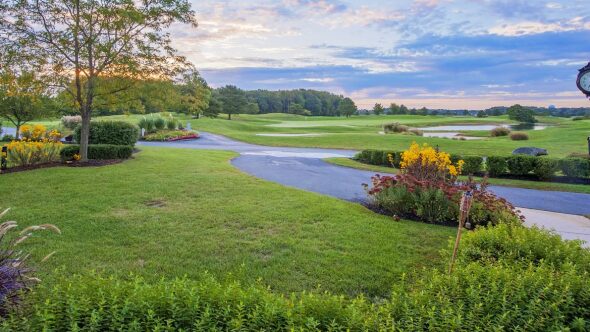
Heron Ridge Golf Club

Rating Snapshot


About
| Tee | Par | Length | Rating | Slope |
|---|---|---|---|---|
| Boom-Boom | 72 | 7017 yards | 73.9 | 131 |
| Blue | 72 | 6479 yards | 71.5 | 118 |
| White | 72 | 6044 yards | 69.0 | 118 |
| Gold (W) | 72 | 5458 yards | 66.3 | 111 |
| Red (W) | 72 | 5011 yards | 68.5 | 111 |
| Hole | 1 | 2 | 3 | 4 | 5 | 6 | 7 | 8 | 9 | Out | 10 | 11 | 12 | 13 | 14 | 15 | 16 | 17 | 18 | In | Total |
|---|---|---|---|---|---|---|---|---|---|---|---|---|---|---|---|---|---|---|---|---|---|
| Boom Boom M: 74.0/138 | 403 | 527 | 407 | 431 | 196 | 424 | 404 | 199 | 554 | 3545 | 439 | 585 | 312 | 520 | 367 | 182 | 456 | 210 | 401 | 3472 | 7017 |
| Blue M: 71.6/133 | 377 | 485 | 380 | 339 | 175 | 409 | 369 | 186 | 522 | 3242 | 425 | 562 | 280 | 487 | 337 | 169 | 417 | 184 | 376 | 3237 | 6479 |
| Blue/White M: 70.6/131 | 377 | 474 | 380 | 318 | 175 | 385 | 369 | 165 | 522 | 3165 | 397 | 562 | 246 | 487 | 337 | 157 | 417 | 165 | 348 | 3116 | 6281 |
| White M: 69.4/128 | 346 | 474 | 358 | 318 | 133 | 385 | 367 | 165 | 496 | 3042 | 397 | 523 | 246 | 451 | 334 | 157 | 381 | 165 | 348 | 3002 | 6044 |
| White/Gold M: 68.2/125 W: 73.2/132 | 346 | 431 | 358 | 292 | 133 | 324 | 367 | 152 | 496 | 2899 | 361 | 523 | 228 | 451 | 310 | 135 | 381 | 147 | 319 | 2855 | 5754 |
| Gold M: 66.9/123 W: 71.6/127 | 310 | 431 | 326 | 292 | 122 | 324 | 341 | 152 | 438 | 2736 | 361 | 476 | 228 | 430 | 310 | 135 | 316 | 147 | 319 | 2722 | 5458 |
| Gold/Red M: 66.0/120 W: 70.3/125 | 310 | 393 | 326 | 269 | 122 | 314 | 341 | 125 | 438 | 2638 | 350 | 476 | 183 | 430 | 300 | 126 | 316 | 125 | 300 | 2606 | 5244 |
| Red M: 65.1/116 W: 69.3/122 | 300 | 393 | 274 | 269 | 104 | 314 | 330 | 125 | 397 | 2506 | 350 | 435 | 183 | 380 | 300 | 126 | 306 | 125 | 300 | 2505 | 5011 |
| Handicap | 15 | 5 | 9 | 13 | 11 | 7 | 3 | 17 | 1 | 6 | 2 | 18 | 8 | 16 | 12 | 4 | 14 | 10 | |||
| Par | 4 | 5 | 4 | 4 | 3 | 4 | 4 | 3 | 5 | 36 | 4 | 5 | 4 | 5 | 4 | 3 | 4 | 3 | 4 | 36 | 72 |
| Handicap (W) | 11 | 5 | 9 | 13 | 17 | 1 | 7 | 15 | 3 | 4 | 2 | 16 | 8 | 14 | 18 | 6 | 12 | 10 |
Course Details
Rentals/Services
Practice/Instruction
Policies
Available Facilities
ClubhouseReviews

A Slow Decline in Quality
The conditioning at Heron Ridge has been getting worse over the years, but it has become unacceptable, especially for a place that wants to charge Golden Horseshoe and Royal New Kent prices. Greens and fringes are different mixes of grasses, leading to consistently uneven lies and bare spots. Fairways play like hardpan. It's too bad, because the layout here is pretty good, requiring the player to hit a variety of shots. I would've thought the death of Signature would've put Heron Ridge on notice that they need to at least keep the same quality they used to have, but it appears they're determined to slowly deteriorate. Bide a Wee and Sleepy Hole are at the same conditioning level but cost a lot less, so that's where I'll be playing from now on.
Fun VA Beach Course
Fun VB course that is part of a subdivision. Conditions and layout are very good.
Shocking Attitude
Good morning Glen
It is unfortunate but I have to write to you to make a formal complaint against the assistant pro at Heron Ridge who I believe is Carl.
My friends and I had originally booked a 4 ball today with one subsequently dropping out. When I booked in, the other two had already picked up their carts.
I explained to him that I would need my own cart due to the COVID implications and he flatly refused. He told me in no uncertain terms that I would have to share or walk. My playing partners are not family and I see them only once a week. Both are older gentleman and have doctors letters explaining they need to adhere to social distancing guidelines.
My father died from COVID in March, so you will understand my situation.
His attitude was totally unacceptable. He displayed unnecessary arrogance and was totally unsympathetic. At one point he was about to lecture me regarding the phase 3 guidelines but stopped when I told him I knew what they covered and top of the list is maintaining social distancing.
Additionally, we all use Golf Tee Time Pass that clearly states the price is for a round of golf and a cart. It does not state that you have to share.
I did not want to let the situation escalate and offered to pay for a cart several times but he flatly refused telling me I either had to walk or share because he didn't have enough carts. This is nonsense given how many carts were available outside and in the garage.
To add insult, he literally went on to the first tee and in front of everyone around, told my friends unless they shared, they could not play. I am sure you will agree that this is not an acceptable way of dealing with a situation. They had no other choice other than to unload their carts and return to the pro shop for a refund. Just outrageous.
I have never experienced such an unnecessary attitude from a 'pro' in all my years playing golf around the world and he does nothing positive in the way he represents you and your golf course. He was not wearing either a mask or shoes and socks for goodness sake.
We have all enjoyed playing golf at Heron Ridge on many occasions, but I'm sure you will understand that we all agree that the way this guy handled the situation was totally unacceptable and ruined our day completely.

Generally nice course
First time playing the course. It was a generally nice course. The water isn’t in play most of the time. Fairways generally wide open. Rough is short, greens rolled well. It’s a good course but not something to blow you away
Good Times at "The Ridge"
Great Value for the Money...Check out website for daily discounts and save some cash My group got a special for only $30 per player! Course was in GREAT CONDITION! Will play again on next trip...

The putting greens are all slopes
It's very hard putting on these gteens
Nice course
Beautiful fall weather. Got paired with a couple of locals. Nice company and an enjoyable round. The course was in good shape.
Play this course with GOLFNOW.
I live near the course and my Sunday morning GOLFNOW price was a steal. The course is surrounded by minimum 5000 square foot homes so the setting is easy on the eyes. Dodlegs, water, hazards, and length options make it challenging but fair.
Nice Course Starter & Locals Could Learn Some Manners
First for the course. Layout was nice, the greens and fairways were in good condition. Our foursome had a good time playing as it was challenging enough from the back tees for the guys and played much easier from the white tees for our wives.
As for the starter we had a foursome booked for 8:00 am and we were sent off early. Maybe here it is common practice to send out a set of twosomes right behind a foursome without combining them but we immediately had people on our tail after the first whole. We let 2 separate sets of 2 play through before we reached the 5th hole. Upon making the turn the starter said to our wives that you girls need to pick it up because we were behind the pace which we couldn't understand because once the twosomes had passed us we were having to wait a few seconds for them two clear the greens. It became obvious that the locals felt that our wives were playing slow even though we finished the round in 4:15. Comments were made by people who had finished or were waiting to the effect that women should not be allowed on the course before 12pm. We didn't let the boys club ruin our day but it was disappointing.
Herion ridge
Was not impressed with course and definitely not the price
Pleasantly suprised
Went to Heron Ridge with lower expectations but the course was in good conditions and the staff friendly. Nice beach course. Would play again
Horrible greens
The greens and tee boxes should be in much better condition for the amount they are charging.
Fabulous 18-holes
1st time playing here, great course! Tee boxes and greens in good shape (ladies too). Overall course played well. 80 degrees and sunny and not at work. Who could ask for anything else? Would definitely come back to play here when I'm down by the beach.
Great golf
This course is full of challenges from any tee box. The set up is great for all handicaps. The firm fast greens are great. I truly enjoyed playing this course.
Great course in great shape.
I really love this course, lots of great holes. The fairways, tees and greens were all in great shape. The pace of play was not bad, 4 hours and 45 minutes on Fathers day. It would have been better but the group in front us got a little behind. But the marshal was trying to move them along so they were doing the best they could. I do agree with one of the other reviewers though, the really is no restrooms out on the course so it can't get uncomfortable for some golfers. I know I couldn't bring my wife. It seems like an easy fix to put a couple of port a potties out there. Especially with all the houses around. That's the only thing I can ding them on. overall a great place to play.
Great course in Virginia Beach
I've been playing different courses in the area for the last 4 weeks and as it stands so far, Heron Ridge was in the best shape overall. Great fairways, greens, bunkers and Tee boxes. The only issue is there were no restrooms on the course and no beverage cart was seen our entire round. Note: our tee time was 2:56 if that would make a difference on the beverage cart. My hat is off to the Superintendent and crew.
5272015 Heron Ridge
I always like playing at Heron Ridge. It is a good challenge with open fairways and it caters to players that fade their ball.
We had a sunny day in the 80's. Greens were moderately quick, fairways had a good roll to them and the course is picturesque as well.
A few of the holes are blind shots where you can't see the green. Just hit as straight as you can. Number 18 needs your shots to stay to the right because there is water on the left that comes in to the fairway more than people think.
Recommended for all player levels.
Great Golf Course
Enjoyed the course. Greens are smooth bent grass. Fairways are dormant Bermuda Grass but just coming out of hibernation. Well maintained and a great value for the money...check out twilight & super twilight rates!

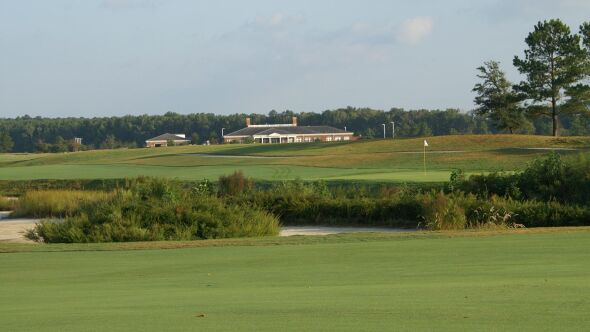


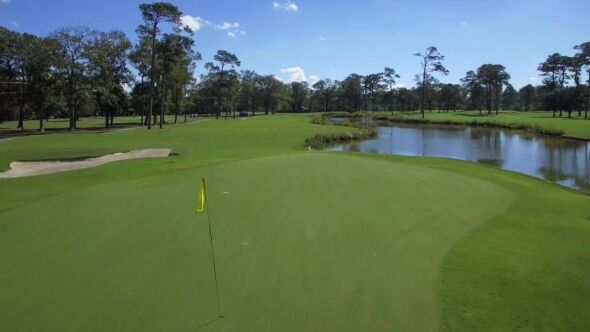


Kingsmill Resort Stay & Play Golf Package

Golden Horseshoe Stay & Play Golf Package
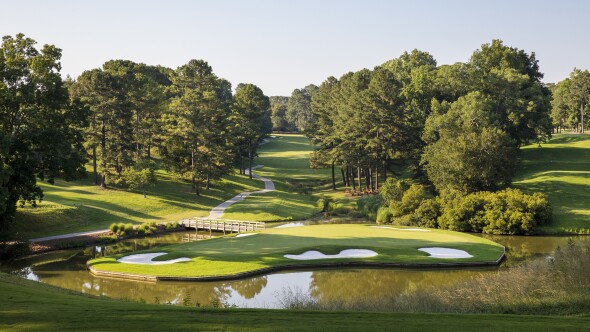
Williamsburg Golf Around Package

Richmond Golf Getaway Package