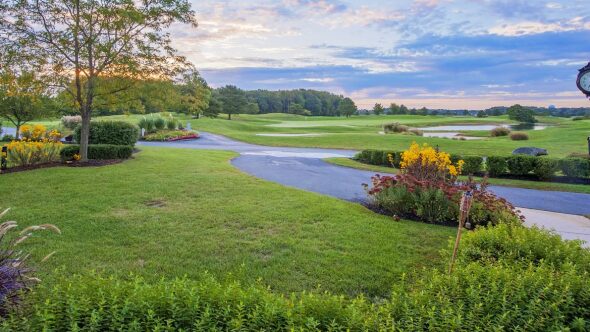
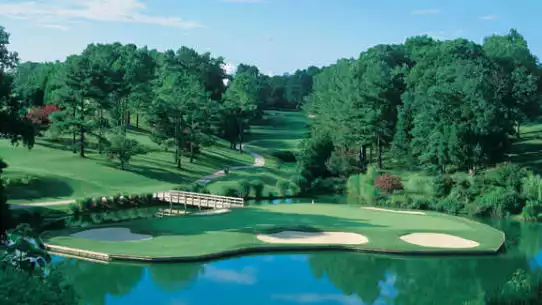
Kingsmill Resort - Plantation Course

Rating Snapshot


About
| Tee | Par | Length | Rating | Slope |
|---|---|---|---|---|
| Gold | 71 | 6364 yards | 70.7 | 129 |
| Blue | 71 | 5978 yards | 68.9 | 125 |
| Blue (W) | 71 | 5978 yards | 74.7 | 137 |
| White | 71 | 5411 yards | 66.4 | 119 |
| Red/White | 71 | 5141 yards | 65.1 | 116 |
| Red (W) | 71 | 4816 yards | 69.0 | 124 |
| Green (W) | 72 | 3606 yards | 62.1 | 110 |
| Hole | 1 | 2 | 3 | 4 | 5 | 6 | 7 | 8 | 9 | Out | 10 | 11 | 12 | 13 | 14 | 15 | 16 | 17 | 18 | In | Total |
|---|---|---|---|---|---|---|---|---|---|---|---|---|---|---|---|---|---|---|---|---|---|
| Black M: 70.9/130 | 365 | 519 | 378 | 403 | 179 | 369 | 336 | 501 | 117 | 3167 | 421 | 434 | 460 | 387 | 143 | 566 | 349 | 177 | 333 | 3270 | 6437 |
| Blue M: 69.1/126 W: 74.9/141 | 344 | 504 | 350 | 369 | 157 | 347 | 309 | 490 | 109 | 2979 | 395 | 411 | 423 | 361 | 129 | 547 | 329 | 163 | 287 | 3045 | 6024 |
| Blue/White M: 68.4/123 W: 74.1/139 | 339 | 484 | 350 | 360 | 148 | 347 | 309 | 490 | 109 | 2936 | 372 | 381 | 423 | 340 | 129 | 513 | 329 | 149 | 287 | 2923 | 5859 |
| White M: 67.3/120 W: 73.3/137 | 339 | 484 | 336 | 360 | 148 | 331 | 283 | 424 | 88 | 2793 | 372 | 381 | 406 | 340 | 120 | 513 | 314 | 149 | 264 | 2859 | 5652 |
| White/Gold M: 65.1/116 W: 71.1/127 | 246 | 356 | 296 | 314 | 148 | 331 | 283 | 424 | 88 | 2486 | 344 | 330 | 406 | 317 | 120 | 464 | 314 | 149 | 264 | 2708 | 5194 |
| Gold M: 64.0/114 W: 69.0/124 | 246 | 356 | 296 | 314 | 128 | 279 | 283 | 363 | 83 | 2348 | 344 | 330 | 307 | 317 | 107 | 464 | 273 | 134 | 222 | 2498 | 4846 |
| Green/Gold M: 61.1/105 W: 65.3/116 | 246 | 230 | 296 | 190 | 128 | 279 | 283 | 293 | 75 | 2020 | 264 | 250 | 307 | 225 | 107 | 364 | 273 | 122 | 222 | 2134 | 4154 |
| Green M: 59.2/100 W: 62.1/110 | 198 | 230 | 210 | 190 | 118 | 210 | 215 | 293 | 75 | 1739 | 264 | 250 | 215 | 225 | 97 | 364 | 180 | 122 | 150 | 1867 | 3606 |
| Handicap | 15 | 5 | 9 | 1 | 13 | 7 | 11 | 3 | 17 | 6 | 8 | 4 | 12 | 18 | 2 | 16 | 10 | 14 | |||
| Par | 4 | 5 | 4 | 4 | 3 | 4 | 4 | 5 | 3 | 36 | 4 | 4 | 5 | 4 | 3 | 5 | 4 | 3 | 4 | 36 | 72 |
| Handicap (W) | 9 | 15 | 3 | 1 | 13 | 5 | 7 | 11 | 17 | 2 | 8 | 12 | 6 | 18 | 4 | 10 | 16 | 14 |
Course Details
Rentals/Services
Practice/Instruction
Policies
Food & Beverage
Bar, RestaurantAvailable Facilities
Clubhouse, Banquet FacilitiesReviews
Reviewer Photos
-
Kingsmill Resort (Plantation), hole 1 Photo submitted by TimGavrichGP on 08/24/2023
-
Kingsmill Resort (Plantation), hole 10 Photo submitted by TimGavrichGP on 08/24/2023
-
Kingsmill Resort (Plantation), hole 16 Photo submitted by TimGavrichGP on 08/24/2023
-
Photo submitted by MikeBaileyGolf on 05/13/2019
-
Photo submitted by MikeBaileyGolf on 05/13/2019
-
Photo submitted by MikeBaileyGolf on 05/13/2019
-
Kingsmill Plantation Course Brent Get back to golf Photo submitted by Brent1002765 on 08/23/2018

Kingsmill’s gentler side is still interesting
Kingsmill’s Plantation course doesn’t look like much on first blush, but little reminders of there being more than meets the eye float by golfers often enough to make it an enjoyable secondary experience on property.
In addition to the pleasant off-course vista of the ruins of the resort’s namesake’s original 17th-century manor house to the right of the par-5 2nd hole, the Plantation’s greens provide most of the interest. Though on the smaller side (due in part to moderate shrinkage over the years), they house a nicely varied palette of ridges, tiers and gathering and shedding slopes, turning many of the shortish holes into something a little more potent than expected. Recent resort expansion has turned the 18th into a very drivable par four, which can send players off with a smile.

Meandering Resort course
The day we played, the River Course was booked with a tournament, so we played the Plantation. Check in was easy and professional. Cart path only, so made for a longer day in the hot weather. Some views of the James river and overall a pretty course but not memorable. Many left to right shots off the tee.
Good warmup course for the River. PM is certainly better pace of play. Enjoyed but If we came back, we would make sure to play the River Course.
Beautiful course
First time playing kingsmill plantation as my wife and I are staying at the resort. Everyone from check in to bag dip and cart girl was phenomenal. Really amazing customer service. Course was in good shape and pace was great throughout. Well worth a look if you’re in the Williamsburg area.
Kingsmills before LPGa
We played both courses at Kingsmills; the Plantation course was an unexpected treat as they were prepping for the Pure Silk. Excellent conditions, not cart path only like the River Course. We also used rentals clubs for the first time and the pro shop looked after everything.
4.25 hours and right to the pool!
We will be back.

Plantation good warm-up for Kingsmill's River Course
Though it's just under 6,400 yards from the back tees, the Plantation Course at Kingsmill Resort is plenty challenging for a resort course and offers a nice complement to the championship River Course at the resort.
Designed by Arnold Palmer, it presents an unusual amount of left-to-right tee shots. They're large, so they are not overly difficult, but you if you get carried away with trying to fade the ball (for right-handers) trouble in the trees definitely looms. Mostly, though, the course is fun. Rolling hills and interesting greens make this a great warm-up to the River Course at the resort. And afterwards, you'll want to check out the Eagles Restaurant and Bar inside the clubhouse, which is a great place to grab a sandwich, crab chowder and local craft brew on tap.

Resort golf at it's best...I'll definitely be back!
I took my wife and 2 daughters to Kingsmill resort to visit Bush Gardens, Colonial WIlliamsburg and to play one round of golf. They had a Family Fun pack special Package so I was able to play the Plantation course for 30 dollars with a cart. The heat Index that day was 105 degrees but It didn't bother me one bit! The course is very friendly and lots of left to right shots so it's good for intermediate and even advance golfers that want to play from the tips. I played from the whites because I just wanted to enjoy myself on my vacation! I most certainly did. I will definitely go back and play this course again. The only bummer part was at the time I went they had someone vandalize the greens. No fault of Kingsmill. I really enjoyed my round!

Fair Test of Your Game
Through the rolling hills of southeastern Virginia, this course will test you. A few forced carries through some scenic history, it will give everyone from the beginner to the advanced player a fair test of their skill. Fun course to play.

A good compliment to the river
This course is pretty open and fun to play. Condition is good and the greens are awesome. A good companion to the better river course. Honestly I’d rate it much better if it weren’t for 1 and 18. 2-17 are great and have a lot of interesting challenging holes. 1 and 18 feel forced into a smaller space than needed. Both are short 4s (under 300) without any dogleg or really anything interesting at all to offer protection. Just take your 4 to start your day and look forward to a great rest of the round. If you’re having a good round thru 17, 18 won’t do anything to change it.
The Club at Kingsmill Plantation Course
Fun course. Always in great shape. Greens small and excellent. Pace of play very good.
Championship Caliber
Course is worthy of professional play. Great finishing holes!
Poor early conditions
The course was mostly brown this early in the year. Apparently not much attention given to Plantation so preparations could be made to River course for LPGA>
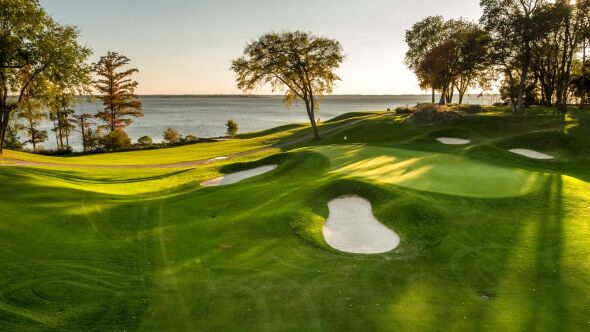


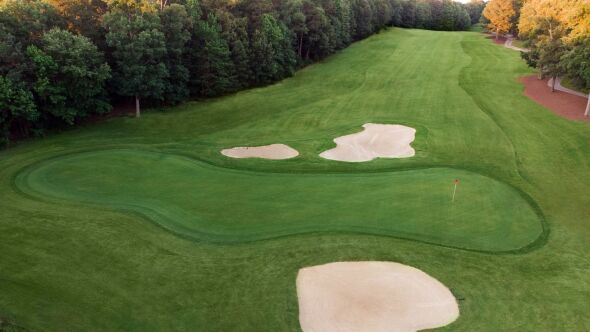

Kingsmill Resort Stay & Play Golf Package
Golden Horseshoe Stay & Play Golf Package
Williamsburg Golf Around Package

Richmond Golf Getaway Package