The Club at Kingsmill - Woods Course

Rating Snapshot


About
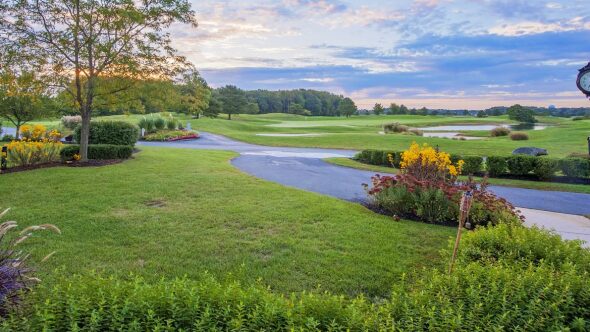
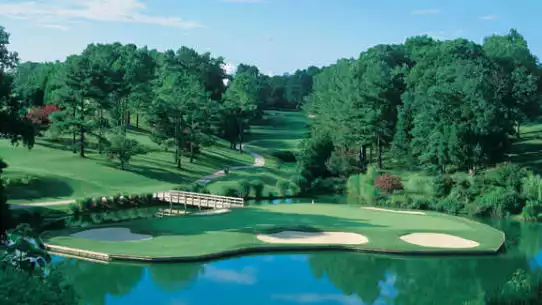
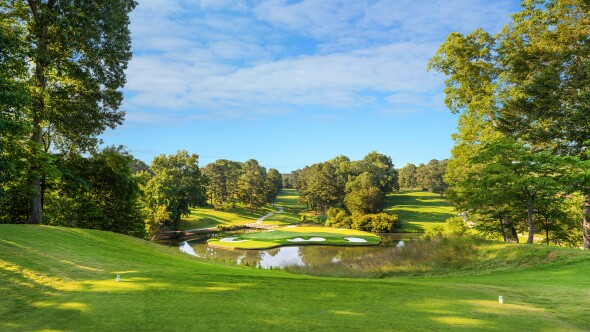
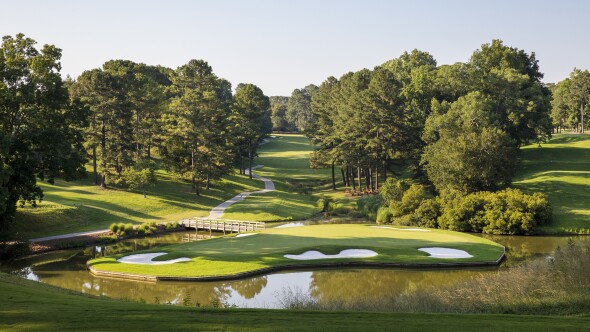
The Woods Course is an instant hit with all golfers. In a recent Zagat Survey, the Woods Course was named one of America's Top Golf Courses. The Woods Course is a 6,659-yard layout with an interesting mix of long and short holes, giving golfers the opportunity to use every club in their bag. A unique feature is the double green with a bunker in the center shared by the par-3 12th hole and the par-4 15th hole. The Woods Course is a delight to play, time after time.
| Tee | Par | Length | Rating | Slope |
|---|---|---|---|---|
| Gold | 72 | 6659 yards | 72.2 | 133 |
| Blue | 72 | 6276 yards | 70.4 | 130 |
| White | 72 | 5798 yards | 68.4 | 126 |
| White/Red | 72 | 5398 yards | 68.4 | 126 |
| Red (W) | 72 | 5148 yards | 70.6 | 124 |
| Green | 72 | 3431 yards | 61.0 | 103 |
| Hole | 1 | 2 | 3 | 4 | 5 | 6 | 7 | 8 | 9 | Out | 10 | 11 | 12 | 13 | 14 | 15 | 16 | 17 | 18 | In | Total |
|---|---|---|---|---|---|---|---|---|---|---|---|---|---|---|---|---|---|---|---|---|---|
| Black M: 72.2/133 | 385 | 387 | 457 | 316 | 525 | 188 | 278 | 145 | 572 | 3253 | 400 | 412 | 184 | 478 | 430 | 384 | 514 | 151 | 453 | 3406 | 6659 |
| Blue M: 70.4/130 W: 76.8/143 | 352 | 363 | 436 | 295 | 499 | 176 | 270 | 133 | 547 | 3071 | 370 | 390 | 162 | 465 | 407 | 366 | 480 | 142 | 423 | 3205 | 6276 |
| Blue/White M: 69.3/128 W: 75.3/140 | 352 | 340 | 405 | 295 | 499 | 176 | 270 | 133 | 522 | 2992 | 325 | 335 | 162 | 465 | 370 | 349 | 480 | 142 | 383 | 3011 | 6003 |
| White M: 68.4/126 W: 74.1/133 | 342 | 340 | 405 | 276 | 456 | 164 | 251 | 128 | 522 | 2884 | 325 | 335 | 138 | 452 | 370 | 349 | 457 | 105 | 383 | 2914 | 5798 |
| White/Gold M: 66.6/120 W: 72.0/128 | 314 | 304 | 335 | 276 | 431 | 147 | 251 | 128 | 479 | 2665 | 284 | 308 | 138 | 452 | 333 | 316 | 457 | 105 | 340 | 2733 | 5398 |
| Gold M: 65.4/117 W: 70.6/124 | 314 | 304 | 335 | 254 | 431 | 147 | 196 | 127 | 479 | 2587 | 284 | 308 | 102 | 408 | 333 | 316 | 389 | 81 | 340 | 2561 | 5148 |
| Gold/Green M: 61.5/107 W: 65.4/113 | 314 | 304 | 230 | 254 | 275 | 147 | 196 | 52 | 275 | 2047 | 284 | 308 | 102 | 250 | 220 | 316 | 389 | 81 | 230 | 2180 | 4227 |
| Green M: 59.5/98 W: 61.0/102 | 220 | 210 | 230 | 191 | 275 | 123 | 120 | 52 | 275 | 1696 | 210 | 210 | 65 | 250 | 220 | 235 | 240 | 75 | 230 | 1735 | 3431 |
| Handicap | 7 | 3 | 15 | 13 | 1 | 9 | 17 | 11 | 5 | 6 | 2 | 8 | 12 | 16 | 4 | 18 | 14 | 10 | |||
| Par | 4 | 4 | 4 | 4 | 5 | 3 | 4 | 3 | 5 | 36 | 4 | 4 | 3 | 5 | 4 | 4 | 5 | 3 | 4 | 36 | 72 |
| Handicap (W) | 9 | 7 | 5 | 13 | 3 | 15 | 17 | 11 | 1 | 8 | 2 | 16 | 14 | 10 | 4 | 12 | 18 | 6 |
Course Details
Rentals/Services
Practice/Instruction
Policies
Food & Beverage
Bar, RestaurantAvailable Facilities
Clubhouse, Banquet FacilitiesReviews
Reviewer Photos

The private side of Kingsmill
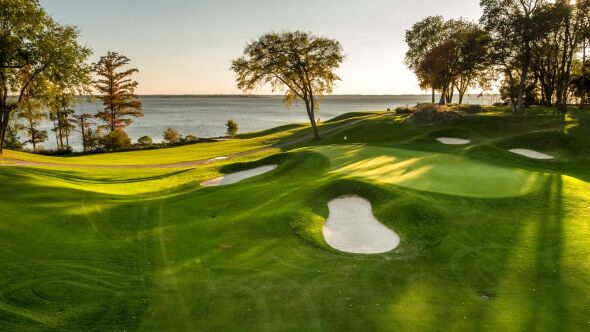
This private club is to Kingsmill what many backcountry areas are to their respective large ski resorts: secluded and open only to those in the know. Unless you have connections or happen buy the right member a drink and score an invite, you’re not likely to find your way onto this pleasant, pristinely-kept members-only retreat, but if you do, you’ll get to enjoy a nice variety of holes with some of the property’s most adventurous greens; the tilted boomerang at the end of the par-5 5th hole is a particular highlight.
After a flattish parkland meander on the front, things ramp up when golfers cross through a deep ravine on the way to the 11th tee to play a run of holes that heave up and down a bit more and offer some attractive views (the entire course benefits from being unencumbered by homes). For those with full access, it’s a nice middle-ground between the tough River Course and the more relaxed Plantation.

Members Only...But If You Get A Chance to Play It, Do So
This is a members only course, but sometimes The Woods is put into rotation for resort guests when either The Plantation or The River (LPGA plays) is closed. We were fortunate, because this was the case. The course is a no-housing development course and plays really long. I have played it a bunch (prior to it becoming members only) and it's one of my favorites. Always in excellent condition, this time was no exception. Tee boxes, fairways, bunkers, and greens all excellent. The rough was thick and very penal. The front is definitely flatter than the back nine, which has a lot of elevation changes. It's a good challenge. If you get a chance to play it while staying at the resort, take advantage of it. It doesn't happen often.



Kingsmill Resort Stay & Play Golf Package
Golden Horseshoe Stay & Play Golf Package
Williamsburg Golf Around Package

Richmond Golf Getaway Package